





Wind is the quiet foundation of a lot of great atmospheres. On its own it's a soft, low, open sound that suggests wide spaces; under other layers it adds depth and a sense of weather without ever taking over.
A gentle low-frequency bed
Light wind is mostly low-frequency energy, which makes it a smooth, unobtrusive base. Because it's steady rather than changing, it interferes with concentration far less than variable sound does, so it masks low rumble and covers the room without pulling at your attention. It pairs naturally with fire, rain and forest to build a complete outdoor scene.
Contrast that comforts
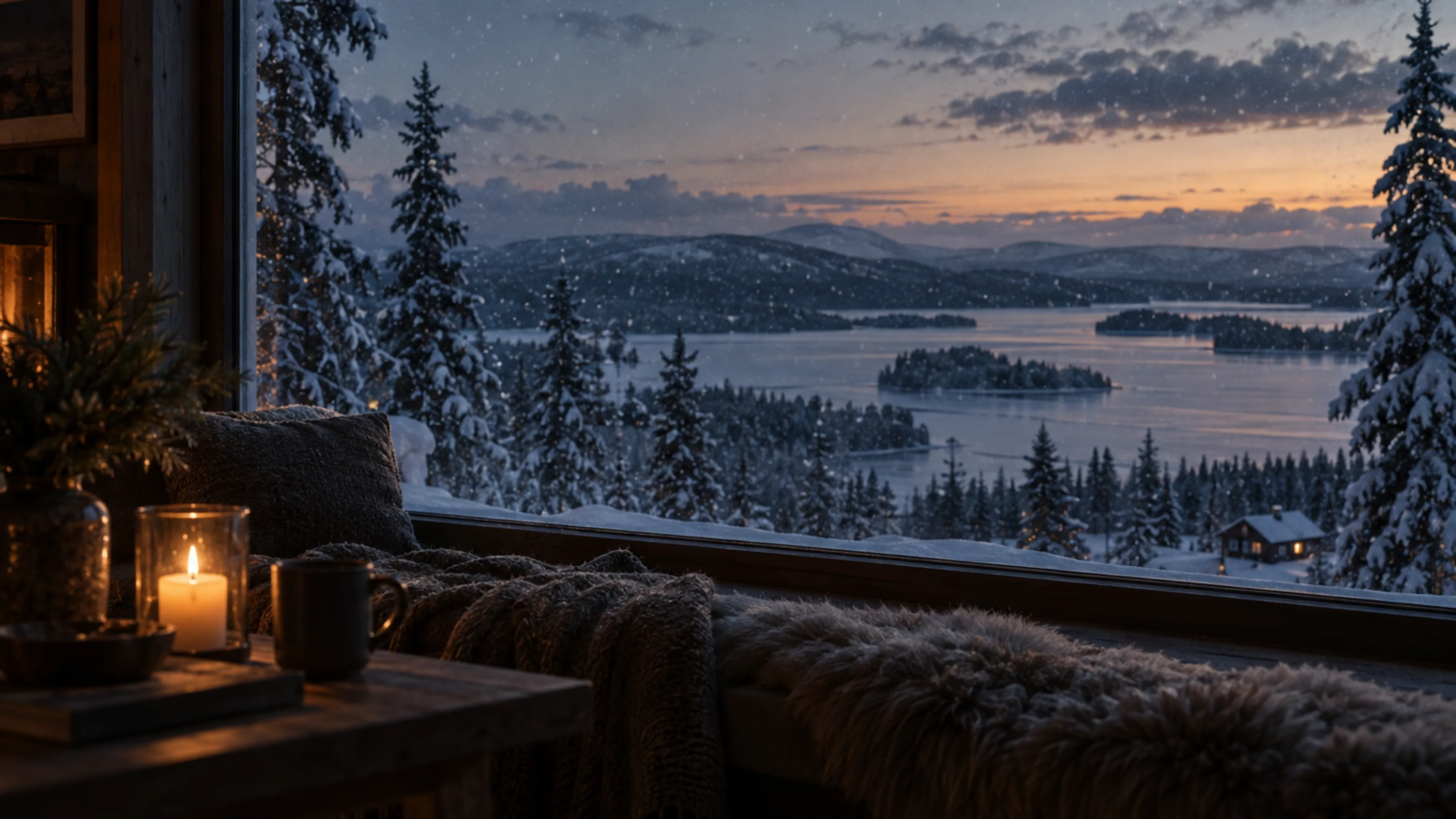
Wind outside a warm room is a classic comfort: the movement out there makes the stillness in here feel safer. That's why it works so well behind a fire on a winter scene.
How to use it
- Use wind as a low bed under fire, rain or forest.
- Raise it for open, exposed scenes; lower it for cozy ones.
- Pairs perfectly with Scandinavian Winter and Mountain Cabin.
Frequently asked questions
Are wind sounds good for sleep?+
Soft, steady wind can be a soothing sleep sound, especially paired with a fire or rain, though, as with all sleep sounds, the evidence is mixed. Keep it gentle and use the fade-out timer.
What pairs well with wind sounds?+
Fire, rain and forest. Atmospheres like Scandinavian Winter and Mountain Cabin use wind as the base of a cold, cozy outdoor scene.